

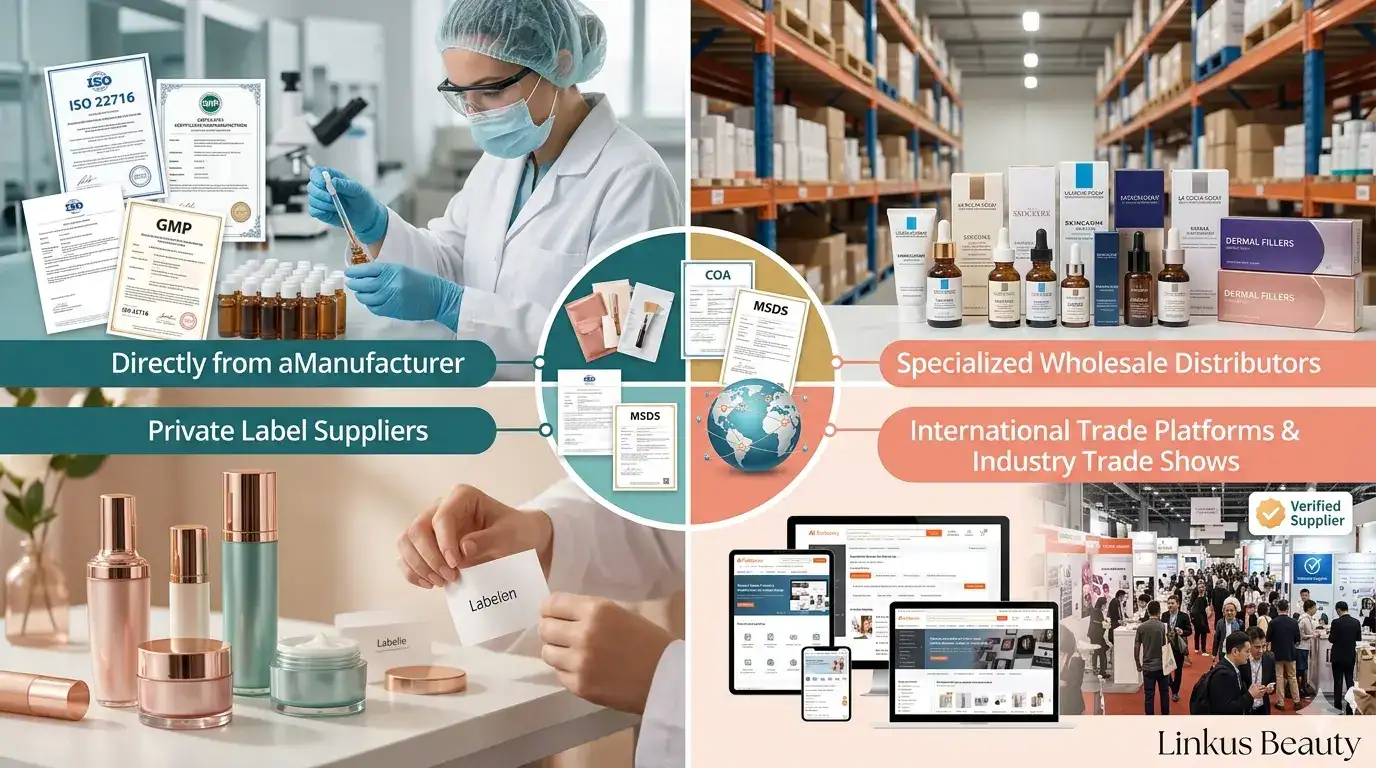
Choosing a professional beauty product supplier has a direct relation to your brand quality and profit margins. This decision also affects your legal compliance in the global market. If you follow a wrong sourcing path, your brand might face product failure or serious legal risks. Sourcing is a strategic decision for any beauty brand owner. It is not just a simple purchasing task. You must find a partner who understands cosmetic science and safety rules. A reliable supplier helps you maintain a good reputation with your customers.
This blog focuses on practical sourcing methods that real beauty brands use every day. We will discuss how to find the right partners for skincare and aesthetic products. You will learn how to check for product authenticity and how to manage supply chain risks. Right sourcing allows you to scale your business without facing stock issues or quality drops. We use original facts about the beauty industry to guide you through this process. Our goal is to help you build a professional sourcing system that supports long-term growth.
Sourcing directly from a beauty manufacturer gives you maximum control over your brand identity. You can talk to the factory about specific ingredients and chemical stability. This model is ideal for long-term scaling because it offers better pricing. You do not have to pay extra fees to middlemen or agents. Direct sourcing also allows for customization options. You can create unique formulas that separate your brand from competitors in the saturated beauty market.
You must find factories that hold ISO 22716 and GMP (Good Manufacturing Practices) certifications. These specific documents prove that the factory maintains a sterile environment for mixing creams and serums. In the beauty world, even a small amount of dust can ruin a whole batch of foundation. You should also request factory audits to see their laboratory setup. An audit shows if they have the right equipment to test for bacteria and heavy metals in your lotions. Check their production capacity for cold-filling and hot-filling processes. A verified manufacturer will show transparency about where they source their active ingredients and botanical extracts. This level of detail ensures that your brand avoids skin irritation issues caused by low-quality raw materials.
Never place a big order without testing the actual formula on skin first. You must request samples to check the chemical stability and product consistency. Look at the absorption rate of the cream and the spreadability of the serum on different skin types. You should also perform packaging validation by placing the filled bottles in different temperatures. This check ensures that the serum does not oxidize when the sun hits the glass. Test the sample for "pilling," which is when a product balls up on the skin after application. You must also check for any strange odors that might suggest the oils are going rancid. If the sample maintains its color and texture for several weeks, you can proceed with a contract.
Compliance is the most important part of sourcing beauty items. You must ask for a COA (Certificate of Analysis) for every batch. This paper lists the purity of the ingredients. You also need an MSDS (Material Safety Data Sheet) to know how to store the items safely. In the injectable category, compliance is even more critical. For example, when you work with an experienced botulinum toxin supplier, storage is a huge factor. These products must stay in a cold chain to remain effective. Authenticity must be proven with clear paperwork to avoid medical risks.
Price negotiation helps you maintain healthy margins so you can spend more on beauty marketing. You should ask the manufacturer for volume-based pricing for different bottle sizes. This means your cost per unit drops when you buy more liters of a specific formula. You also need to discuss the Minimum Order Quantity (MOQ) for custom scents or unique shades. A good strategy is to start with a trial order for a single hero product like a moisturizer. Once your target audience accepts the product, you can move to a bulk order strategy for the entire skincare line. This keeps your cash flow safe while you test new beauty trends without wasting money on unsold stock.
After you agree on the chemical formula, you must talk about the lead time. This is the total time the factory takes to blend the ingredients and pack your jars. You must also finalize the labeling details to meet cosmetic regulations. Make sure your ingredient list follows the INCI (International Nomenclature Cosmetic Ingredient) standards of your country. Logistics should be planned carefully to avoid heat damage during long shipping journeys. Sensitive active ingredients like Vitamin C, Retinol, or peptides can degrade and lose their potency if the container gets too hot. You should ask for temperature-controlled shipping to protect the chemical integrity of your skincare range.
Wholesale distributors aggregate multiple beauty brands in one place. This is a very fast way to source items because the stock is usually ready to ship. It has low complexity compared to managing a factory relationship. Distributors are very helpful for brands that want to offer a wide variety of skincare or makeup products quickly. They handle the storage and global logistics for you.
This model is particularly useful when you explore niche skincare categories. For example, a reliable skin booster supplier must have a consistent stock of high-demand items. Skin boosters are very popular right now. If your distributor is reliable, you can fulfill customer orders without waiting for months. This consistency keeps your brand relevant in the fast-moving aesthetic market.
You can find specialized distributors through B2B directories and professional networks. Trade shows are also a great place to meet them in person. Look for distributors who only focus on beauty and aesthetics. They usually have a better understanding of how to handle sensitive liquids and creams. You can also join industry groups to get recommendations from other beauty brand owners.
Before you sign up, look at the variety of skincare and aesthetic items the distributor offers. Do they have different types of concentrated serums, pH-balanced toners, and gentle cleansers? A deep portfolio shows that the distributor understands the complex layers of a professional beauty routine. You should check if they carry trending active ingredients like Niacinamide or just basic petroleum-based products. A distributor with many medical-grade options allows you to grow your brand within a single sourcing platform. This depth ensures that you can find specific products for different skin concerns, from acne-prone skin to anti-aging needs.
Distributors add a markup to the factory price to cover their storage and logistics costs. In the beauty industry, wholesale markups usually range from 20% to 50% depending on the brand’s popularity. You must analyze this markup to ensure your retail price still allows for a healthy profit margin of at least 50%. Compare the prices of different distributors for the same professional-grade serums or aesthetic tools. Sometimes a higher price includes faster temperature-controlled shipping or better insurance for glass bottles. You must balance the unit cost with the added value they provide to your beauty supply chain. Calculating your landing cost per item is the only way to protect your brand’s financial health.
A distributor is not helpful if they are always out of stock of your "hero" products. You must check their inventory reliability for high-demand items like hyaluronic acid or popular dermal fillers. Ask them how they manage their climate-controlled warehouse and how often they restock from the primary manufacturers. You need a partner who can guarantee that your best-selling skincare or aesthetic items will be available during peak sales seasons. If a distributor has a history of stock-outs, your customers will switch to a competitor's brand. Frequent stock-outs also hurt your brand’s ranking on retail platforms and destroy customer trust. A reliable inventory flow is essential for maintaining the shelf-life rotation of your beauty products.
Ask about the delivery timelines and the specific beauty logistics model they use. Many cosmetic liquids and glass ampoules are fragile and sensitive to movement. Some distributors offer specialized fulfillment services, which means they ship directly to your clinics or retail customers. You need to know how they pack the products to prevent the breakage of glass droppers or the leakage of oil-based serums. Fast and safe shipping is a key part of the customer experience for any beauty brand. You should check if they use cushioned packaging that protects the primary cosmetic boxes from getting crushed. Reliable fulfillment ensures that your products arrive in professional, shelf-ready condition every time.
Private label sourcing is the fastest way to launch a beauty brand without building a manufacturing plant or a chemistry lab. The supplier already owns market-ready formulas that are chemically stable and dermatologically tested for skin safety. You just add your brand name and choose custom packaging that fits your brand aesthetic. This model allows you to focus on beauty marketing and social media sales instead of expensive laboratory work or R&D. Since the products are already developed, you do not have to wait years for safety testing or stability trials. It is a perfect solution for new brands that want to enter the skincare or aesthetic market with proven, effective products.
Even with private labels, you might want small formula tweaks to make your brand unique. Look for a supplier who can add a specific signature scent or a unique botanical extract to the base cream or serum. You should also check their specialized packaging options, such as airless pump bottles or UV-protected glass. A premium bottle or a unique metallic cap can make a standard moisturizer look like a high-end luxury product. Customization helps your brand stand out on the retail shelf and justifies a higher price point.
Private label suppliers have many SKUs that have already passed rigorous stability tests and microbial checks. These formulas are safe for various skin types and have a proven shelf-life. You should review the ingredient lists to make sure they align with your brand values, such as "vegan" or "cruelty-free." For example, if your brand focuses on "clean beauty," the formulas must be free from sulfates, parabens, and synthetic dyes. Choosing a tested formula reduces the risk of skin irritations and product recalls.
Your brand design is the first thing that attracts a customer to your skincare range. You must work with the supplier to develop professional packaging that protects the chemical integrity of the product. The labels must follow all cosmetic compliance rules, such as showing the full INCI ingredient list and the batch number. Good design and high-quality silk-screen printing make your beauty products look professional and expensive. This increases the perceived value of your brand in the eyes of the user and builds long-term loyalty.
One major advantage of private labeling is the low Minimum Order Quantity (MOQ). You can often start with just 50 or 100 units of a specific serum or face mask. This lowers your initial investment and reduces the financial risk of carrying too much inventory. You should understand the cost structure clearly, including the price of the bulk liquid and the cost of the secondary packaging. Ask if the price includes the assembly of the product and the application of labels. Knowing your total landing cost helps you set a retail price that covers your marketing expenses.
You must perform a final quality check on the production batch before you start selling. Many brands in the aesthetic category use a wholesale dermal filler supplier for a private label model. This allows them to manage medical compliance and speed-to-market at the same time. You must check that the filler or skin booster has the correct density and pH level for safe application. Quality assurance protects your customers from adverse reactions and secures your legal standing in the professional beauty market.
International trade platforms offer a massive cost advantage for beauty brands that need high-volume production. You can find thousands of cosmetic manufacturers and packaging specialists from different countries. This gives your brand huge product diversity and access to global beauty innovations. However, managing the risk of formula contamination or fake materials is the most important part of global sourcing. You must ensure that the manufacturer understands international safety standards for topical and injectable products.
Alibaba is a massive marketplace for finding primary manufacturers of skincare jars and bulk cosmetic liquids. Global Sources is often a better choice for finding high-end beauty tools, such as LED therapy masks or professional salon electronics. You should choose the platform that lists the most verified suppliers for your specific beauty niche. Use advanced search filters to find companies that specialize in specialized areas like organic haircare or medical-grade aesthetics.
Do not talk to every supplier that appears in your search results. Shortlist only those who have a "Verified" status and a history of exporting to regions with strict cosmetic laws. Look at their transaction history to see if they have long-term relationships with other beauty brands. You should also check for beauty-specific certifications like ISO 22716 or GMP (Good Manufacturing Practices). Shortlisting helps you avoid low-quality manufacturers that use unsafe pigments or banned chemicals in their formulas.
Use simple English and technical terms to explain your beauty brand’s needs. You should provide detailed specifications for the formula viscosity, the Pantone color of the packaging, and the type of finish. If you want a specific active ingredient like hyaluronic acid, you must tell the factory the exact percentage and molecular weight you require. Clear communication prevents mistakes during the bulk production process. You can also send high-resolution photos or technical drawings of your bottle designs to make your requirements even clearer.
Always use secure payment methods like Escrow or Trade Assurance to protect your investment. These systems hold your money until you receive the beauty products and perform a quality check. You can also use a staged payment system. This means you pay a 30% deposit to start production and the remaining 70% only after a third-party inspection agent verifies the batch quality. Managing your payments carefully protects your business capital from potential fraud or production errors.
International shipping for beauty products involves complex customs duties and strict ingredient inspections. You must have all the legal paperwork, such as the INCI list and the safety data sheets, for your goods to enter your country. When you source bulk cosmetic materials, like from a trusted wholesale body filler supplier, the shipment weight is very high and the items are sensitive to impact. You should never skip a pre-shipment quality inspection or a verification of the sterile seals. If the products are damaged by heat or arrive as fakes, your brand will lose a lot of money and face high safety risks.
Trade shows allow for direct interaction with professional beauty suppliers and cosmetic chemists. This face-to-face meeting builds immediate trust and helps you close sourcing deals much faster than emails. You can see the actual physical quality of the formulas and meet the executive team behind the manufacturing business. It is a great way to find new innovations, such as sustainable packaging or advanced peptide technology, in the beauty world. Meeting a partner in person ensures they understand your brand vision for high-quality skincare or aesthetic products.
There are many global and regional beauty expos every year that focus on raw materials and finished goods. Events like Cosmoprof and in-cosmetics are famous for bringing the best ingredient suppliers and packaging factories together. You should identify the shows that focus specifically on the categories you need, such as professional salon tools or organic skincare. Planning your visit by checking the exhibitor list allows you to meet many potential manufacturing partners in just a few days. These shows provide a roadmap for the latest trends in the global beauty industry.
At a beauty trade show, you can perform live product testing on your own skin. You can check the absorption of a cream or see how makeup pigments look under professional studio lights. This on-site evaluation is much better than looking at edited photos on a website. You can also ask technical questions about the pH levels and active ingredient concentrations. Getting immediate answers from factory experts helps you understand if their manufacturing process fits your brand standards.
Meeting a beauty supplier in person builds a strong professional relationship that lasts for years. This personal connection gives you better negotiation leverage for future bulk orders and custom formulations. Suppliers are more likely to help you with priority production slots or lower prices if they know you personally. A good relationship is a long-term asset that ensures your beauty brand gets the best service during high-demand seasons. It is easier to solve supply chain issues when you have a direct line to the factory owner.
You can compare ten different cosmetic manufacturers in one afternoon at a single trade show. This side-by-side comparison helps you find the best formula quality for the most competitive price. You can see which supplier has the latest airless packaging technology and who offers the most professional customer service. This efficiency saves you weeks of online research and many international phone calls. You can physically hold the bottles and jars to check the weight and luxury feel of the materials.
After the show ends, you must follow up with the beauty suppliers you liked to finalize the details. You should secure formal contracts that outline the quality standards and the production pricing. In sensitive product categories like injectables, meeting a verified lipo lab supplier face-to-face is the best way to confirm authenticity. It gives you full confidence that the products are real and safe for professional use in clinics. Following up quickly after a meeting ensures that your brand stays at the top of the supplier’s priority list.
Local sourcing offers faster delivery and lower logistics risks for your beauty brand. It is often easier to manage compliance because the supplier knows the specific health and safety laws of your region. This model is very stable for brands that need to restock "hero" products quickly to avoid missing out on viral sales trends. By sourcing closer to home, you reduce your carbon footprint and avoid the unpredictable delays of international shipping. A local supply chain acts as a safety net, ensuring your shelves are never empty when customer demand spikes.
You can find reliable local manufacturers and packaging providers through regional beauty associations and business networks. Talk to other local brand owners to see who they use for specialized services like screen printing or small-batch filling. A local supplier allows you to visit their facility anytime to check on your production run. This physical proximity helps you build a transparent and honest partnership based on real-time feedback. Being able to drive to your factory for a last-minute quality check is a massive advantage for maintaining brand standards.
Even local suppliers must follow strict safety standards set by regional health authorities. In 2026, you must ensure your manufacturer is registered under the latest cosmetic facility regulations. Check if they have the right licenses to handle specific active ingredients like alpha hydroxy acids or chemical sunscreens. Regional compliance is the key to avoiding legal trouble and protecting your brand from expensive lawsuits. Make sure the supplier uses clean-room technology and safe, traceable manufacturing processes for every batch.
Local sourcing might have a higher unit price compared to overseas factories, but you save a lot on shipping, customs duties, and import taxes. You also get your products much faster, which improves your cash flow. You must evaluate the cost-vs-speed tradeoff to see how it affects your profit margins. Often, the convenience of having fresh stock in three days instead of three months is worth the extra cost per unit. This agility allows you to run a "lean" inventory and reduces the risk of having thousands of unsold items in a warehouse.
Start with small trial batches to test the supplier’s consistency in formula color and fragrance. Check if the quality of the second order matches the first one exactly. Small orders help you build a working relationship with the factory without risking a large amount of capital. Once you are happy with the stability and texture of the products, you can scale up your orders for a national launch. This "start small" approach allows you to fix any formulation issues before they reach a large number of customers.
A local partner can help you innovate and create new products much faster than an overseas factory. Local sourcing is particularly useful when you work with a professional fat dissolving injection supplier. These specialized aesthetic products need careful temperature-controlled storage and fast delivery to maintain their chemical integrity. A local partner can ensure the product stays safe from the warehouse to your clinic’s door without any risk of spoilage. Building a long-term bond with a local supplier ensures they will prioritize your brand during busy holiday seasons.
Trend-based sourcing gives your beauty brand a major competitive edge in a crowded market. If you can launch a viral skincare tool or a trending active ingredient before your competitors, you will see much faster sales growth. This strategy requires a very flexible sourcing system and a fast production cycle to capture the "hype" before it fades. Success in this area depends on your ability to find suppliers who can move from a concept to a finished product in just a few weeks. Modern beauty brands thrive by staying agile and responding quickly to what customers are talking about online.
You must use social media platforms and online marketplaces to find what is trending in the beauty world right now. Look for new active ingredients, such as mushroom extracts or specialized peptides, that influencers and dermatologists are talking about. You should also check search data to see which beauty products people are searching for on Google and TikTok. Staying ahead of these trends helps you capture the market share early before the big brands dominate the space. Analyzing consumer behavior allows you to predict which skincare textures or makeup finishes will be the next big hit.
Before you invest your capital in a lot of stock, you must validate the demand using real data and competitor analysis. See if people are actually buying the product or if the trend is just a short-term hype that will disappear in a month. You can check the sales volume of similar items on major retail platforms to confirm the market interest. Validation prevents you from buying thousands of jars of a product that will sit on your warehouse shelf forever. Smart brand owners use small digital ads to test interest before they finalize a large sourcing contract.
You need beauty suppliers who offer low Minimum Order Quantities (MOQs) and very fast production timelines. These flexible partners allow you to test a new trend without buying ten thousand units upfront. Flexible manufacturers are the key to a successful trend-based beauty brand because they can pivot their production lines quickly. They help you launch a "limited edition" run to see how the market reacts without a huge financial risk. You should look for factories that specialize in small-batch production and have raw materials ready for immediate blending.
Use pilot launches to see how your target customers react to the new formula or beauty tool. If the customer feedback is positive and the re-order rate is high, you know you have a successful product. Testing before scaling reduces your financial risk and protects your brand reputation. This stage allows you to fix any small issues, such as a bottle cap that is hard to open or a serum that is too sticky. By listening to early users, you can perfect the product before you move into a mass-market distribution phase.
Once you have a winning product that sells out quickly, you must use a bulk ordering strategy to lower your production costs. This ensures you always have enough inventory during periods of high demand and viral growth. In the skincare accessories category, brands often work with a reliable facial mist supplier to keep up with the constant need for hydration products. A steady supply chain helps you maintain your ranking on search engines and prevents customers from going to other brands. Scaling up with a trusted partner allows you to optimize your margins and build a dominant position in that trending category.
Developing a professional sourcing system requires a deep understanding of different supply chain models. Direct manufacturing gives your brand full authority over the chemical formulas and unique ingredient concentrations. Wholesale distributors provide a fast route to market with ready-made inventory for high-demand skincare categories. Private labeling offers a balanced path by using stable, pre-tested formulas that reduce the need for long laboratory trials. International platforms and local suppliers each offer unique benefits, from global cost advantages to regional speed and easier compliance management. By combining these different methods, a beauty brand can protect itself from stock shortages and unpredictable price changes.
A successful beauty brand must prioritize long-term stability and ingredient integrity over short-term savings. You should focus on building a diversified sourcing network that can handle both core products and fast-moving market trends. Strong quality control systems at every stage ensure that your aesthetic and skincare items remain safe for everyday use. Scaling your business effectively means moving from trial batches to bulk production once you have validated the market demand. This structured approach helps you maintain healthy profit margins while building a reputation for excellence. A professional supply chain is the foundation that allows your beauty brand to grow into a trusted industry leader.
Building a world-class brand is much easier when you have a reliable partner to handle the technical side of the supply chain. You should focus your energy on marketing and customer engagement while leaving the sourcing complexities to the experts. To optimize your inventory and maximize your retail margins, you must learn to strategically source your inventory from a partner that values safety and authenticity. This strategic choice helps you maintain a consistent stock of high-performing formulas that your customers will love.
If you are ready to expand your brand with professional-grade supplies, you can get wholesale beauty products from Linkus Beauty. We provide a wide range of aesthetic and medical beauty solutions that meet strict international safety standards. Our team works closely with brand owners to ensure that every shipment of dermal fillers or specialized skincare meets your exact specifications. By choosing a dedicated supply partner, you can ensure that your brand always delivers the best results to your clients. We help you build a solid supply chain that supports your vision for a successful and profitable beauty business.
Finding a reliable supply chain is the most critical step for any company entering the cosmetics or medical aesthetics market. Many businesses focus entirely on marketing and forget that the product's formula is the actual engine of growth. A major error is selecting a manufacturing partner based only on low quotes rather than technical expertise. You must partner with a reputable beauty product supplier who understands global safety standards and ingredient stability. If you fail to verify the source of your inventory, you risk receiving contaminated batches or unstable formulas. A successful beauty brand always prioritizes the safety of its users over the speed of the launch. This guide explores the technical pitfalls in the procurement process and how you can avoid them to build a sustainable business. A successful procurement strategy requires a deep understanding of chemical regulations and manufacturing transparency. Sourcing is not just about moving boxes; it is about ensuring every serum, cream, or injectable meets strict quality benchmarks. In the following sections, we will break down specific errors ranging from laboratory negligence to logistics failures. By studying these mistakes, you can protect your investment and ensure that your shelves are always filled with safe, high-performance items. We will focus on the real-world challenges of managing a supply chain in a highly regulated industry. Most beauty brands fail because they do not realize how small ingredient changes can ruin a whole batch. Neglecting Laboratory Validation and Chemical Compliance The most dangerous mistake is skipping the verification of chemical purity. Every cosmetic or aesthetic item interacts directly with human tissue. If the concentration of active ingredients is too high or the pH level is incorrect, the result can be severe skin irritation or legal lawsuits. You should never assume a formula is safe just because the packaging looks professional. A beauty product brand must take full responsibility for the chemicals it puts into its products. Overlooking the Importance of Batch-wise COA Documents A Certificate of Analysis (COA) is a mandatory document that lists the laboratory results of a specific production run. Many beauty industries make the mistake of accepting a general specification sheet instead of a batch-specific COA. This document confirms that the product is free from heavy metals, mold, and harmful bacteria. Without this verification, you have no scientific proof of what is inside your bottles, which puts your customers at risk. Each batch must be tested separately because raw material quality can change from month to month. Ignoring Regional Ingredient Restrictions and Bans Global markets have different rules regarding prohibited substances. For instance, a preservative allowed in one country might be strictly banned in another due to safety concerns. A common sourcing error is importing goods without checking the local regulatory list. If your inventory contains restricted chemicals, customs authorities will seize the shipment and you will lose your entire investment. You must perform a thorough audit of the ingredient deck to ensure full compliance with the laws of your target market before signing a contract. Relying on Visual Samples Instead of Performance Testing Receiving a sample that looks and smells good is only the beginning of the process. Many procurement managers make the decision to buy thousands of units based on a quick physical inspection of a single sample. This is a mistake because a product's behavior can change over time when stored in different environments. You need to know how the formula reacts to heat, light, and air before committing to a large investment. Failing to Conduct Stability and Viscosity Tests A high-quality formula must remain consistent throughout its shelf life. If a lotion separates into oil and water after a month, it is a failed product and will result in mass returns. Brands often skip stability testing, where samples are placed in ovens to simulate rapid aging. Understanding the viscosity and texture changes of your formula under different temperatures is essential for maintaining a premium user experience. If the texture becomes too thin or too thick, the application becomes difficult for the customer. Disregarding Packaging Compatibility and Integrity The interaction between the formula and its container is a technical detail that many overlook during the early stages. Some active ingredients can degrade or melt certain types of plastic bottles over time. If the bottle is not compatible with the product, it can lead to leakage or chemical leaching. You must test the air-tightness of caps and the durability of pumps to prevent oxidation. Ensuring the packaging protects the integrity of the formula is vital for long-distance shipping where pressure changes occur. Selecting Manufacturers Without On-site Quality Audits Buying stock from a factory you have never visited is a significant gamble for any beauty product brand. Digital profiles and professional photos can be misleading and may not reflect the actual production floor. A factory might look clean in pictures but may lack proper hygiene protocols in reality. Without a physical or third-party audit, you cannot verify if the workers are following Good Manufacturing Practices (GMP). Assessing Clean Room Standards and Hygiene For advanced skincare and medical-grade solutions, a clean-room environment is non-negotiable to prevent airborne bacteria. Contamination during the filling process can lead to the growth of fungus or yeast inside the containers after they are sealed. Beauty brands that do not check the factory’s sanitation standards often face expensive recalls and brand damage. You should demand proof of ISO certifications and hygiene logs to ensure your goods are produced in a sterile environment that meets medical standards. Verifying Raw Material Traceability The quality of the final item depends entirely on the quality of the raw materials used at the start. Some factories use low-grade fillers to save costs without telling the client. It is a mistake not to ask where the manufacturer buys their chemicals. For instance, if you are sourcing aesthetic injectables, working with a verified skin booster supplier ensures that the hyaluronic acid used is of the highest medical purity. Knowing the origin of your ingredients is the only way to guarantee consistent results for your clients every single time. Sacrificing Product Potency for Lower Price Points Aggressive price negotiation can backfire in the beauty industry. When a manufacturer agrees to an unrealistically low price, they often compensate by reducing the concentration of expensive active ingredients. This results in a "label claim" product—an item that lists an ingredient on the box but contains too little of it to actually work. This practice eventually destroys the trust that a brand tries to build with its audience. Avoiding the Trap of Diluted Formulas If a skin treatment loses its effectiveness, your customers will stop buying from you immediately. Many businesses realize too late that their cheap stock is just water and thickeners with very little active benefit. It is better to pay a fair price for a potent formula than to save money on a product that does not deliver results. High customer retention is built on product performance, and performance requires an investment in high-quality raw materials that actually improve the skin. Seeking Specialized Expertise for High-Risk Items General factories often try to manufacture everything, but they may lack the equipment for specialized categories. For sensitive products like medical aesthetics, you should find a trusted wholesale dermal filler supplier. Specialized manufacturers have the precise machinery and advanced filtration systems needed for sterile production. Using a generalist factory for a specialist product is a common error that leads to inconsistent quality and safety issues that are hard to fix later. Lacking a Diversified Supply Chain Strategy Relying on a single factory for your entire inventory creates a "single point of failure" for your business. If that factory faces a power outage, a labor strike, or a fire, your business stops immediately. Brands of beauty often make the mistake of not having a backup partner ready to take over production during an emergency. You must diversify your sources to maintain a constant flow of goods even when one region faces challenges. Distributing Production Across Specialized Categories No single factory is the best at every type of product. One facility might excel in sunscreens while another is superior in powders or lipsticks. A sourcing mistake is forcing one partner to handle too many different types of formulas that they do not understand. If you are expanding into body treatments, it is wiser to engage a professional wholesale body filler supplier who specializes in large-volume sterile manufacturing. This strategy ensures that every item in your catalog is made by an expert in that specific field. Mitigating Risks of International Logistics Delays Shipping goods across borders involves risks like port congestion and customs delays. Brands that do not plan for these disruptions often run out of stock during peak sales seasons like Christmas or Black Friday. You should maintain a buffer of inventory and understand international trade terms. Securing proper cargo insurance is also a step that many skip to save money, only to lose their entire investment when a shipment is damaged at sea or lost during transit. Ignoring Market Data and Modern Ingredient Trends Sourcing inventory that no longer appeals to modern consumers is a waste of capital. Some companies buy large quantities of old-fashioned formulas because the Minimum Order Quantity is low. However, if the market has moved toward biotechnology or organic beauty, those products will become "dead inventory." You must use data to guide your sourcing decisions rather than personal feelings. Aligning Procurement with Aesthetic Innovations The beauty world moves toward non-invasive clinical treatments very quickly. If you do not monitor these shifts, you will be left with outdated stock that no one wants to buy. For example, the rising demand for non-surgical body contouring means you might need to find a professional fat dissolving injection supplier to stay relevant. Sourcing based on current consumer search data ensures your products sell fast and your cash flow remains healthy throughout the year. Managing Stock Levels to Prevent Expiration Every cosmetic product has a PAO (Period After Opening) and an expiration date. A common financial error is over-ordering to get a bulk discount without a sales plan. If the products expire before you can sell them, the discount becomes a total loss. You should use a data-driven approach to sourcing, starting with manageable quantities and scaling up as your sales volume increases. This prevents the loss of money due to expired or degraded stock in your warehouse. Conclusion Effective sourcing is the foundation of any successful brand. By avoiding common mistakes like poor laboratory testing, ignoring factory hygiene, and focusing only on low prices, you can build a resilient supply chain. Every decision you make during the procurement phase directly impacts the safety and satisfaction of your customers. A brand that invests time in verifying its manufacturing partners will always outperform those who take shortcuts. Remember that transparency and communication are your best tools. Always demand documentation, visit your production sites when possible, and keep a backup plan for your logistics. The beauty industry is built on trust; if you provide high-quality, safe, and effective products, your customers will stay loyal for years. Stay focused on quality control and technical compliance, and your brand will grow naturally in the global market. Avoiding these mistakes is the only way to ensure your business survives in this competitive industry. Partner with Linkus Beauty for Reliable Sourcing Navigating the complexities of manufacturing and international trade is easier with an expert partner. Linkus Beauty is dedicated to providing high-standard cosmetic and aesthetic solutions that help you avoid the sourcing errors mentioned in this guide. We prioritize chemical purity and manufacturing transparency to ensure your brand delivers only the best to its clients. We offer access to beauty items wholesale solutions that balance cost-efficiency with premium quality. Our team ensures that every batch meets the necessary safety benchmarks, allowing you to focus on growing your business. Contact us today to learn how our sourcing expertise can help you launch and scale a successful brand with confidence.
READ FULLChoosing a professional beauty product supplier has a direct relation to your brand quality and profit margins. This decision also affects your legal compliance in the global market. If you follow a wrong sourcing path, your brand might face product failure or serious legal risks. Sourcing is a strategic decision for any beauty brand owner. It is not just a simple purchasing task. You must find a partner who understands cosmetic science and safety rules. A reliable supplier helps you maintain a good reputation with your customers. This blog focuses on practical sourcing methods that real beauty brands use every day. We will discuss how to find the right partners for skincare and aesthetic products. You will learn how to check for product authenticity and how to manage supply chain risks. Right sourcing allows you to scale your business without facing stock issues or quality drops. We use original facts about the beauty industry to guide you through this process. Our goal is to help you build a professional sourcing system that supports long-term growth. Sourcing Directly from Manufacturers Sourcing directly from a beauty manufacturer gives you maximum control over your brand identity. You can talk to the factory about specific ingredients and chemical stability. This model is ideal for long-term scaling because it offers better pricing. You do not have to pay extra fees to middlemen or agents. Direct sourcing also allows for customization options. You can create unique formulas that separate your brand from competitors in the saturated beauty market. Identify Verified Manufacturers You must find factories that hold ISO 22716 and GMP (Good Manufacturing Practices) certifications. These specific documents prove that the factory maintains a sterile environment for mixing creams and serums. In the beauty world, even a small amount of dust can ruin a whole batch of foundation. You should also request factory audits to see their laboratory setup. An audit shows if they have the right equipment to test for bacteria and heavy metals in your lotions. Check their production capacity for cold-filling and hot-filling processes. A verified manufacturer will show transparency about where they source their active ingredients and botanical extracts. This level of detail ensures that your brand avoids skin irritation issues caused by low-quality raw materials. Request Product Samples Before Commitment Never place a big order without testing the actual formula on skin first. You must request samples to check the chemical stability and product consistency. Look at the absorption rate of the cream and the spreadability of the serum on different skin types. You should also perform packaging validation by placing the filled bottles in different temperatures. This check ensures that the serum does not oxidize when the sun hits the glass. Test the sample for "pilling," which is when a product balls up on the skin after application. You must also check for any strange odors that might suggest the oils are going rancid. If the sample maintains its color and texture for several weeks, you can proceed with a contract. Evaluate Compliance and Documentation Compliance is the most important part of sourcing beauty items. You must ask for a COA (Certificate of Analysis) for every batch. This paper lists the purity of the ingredients. You also need an MSDS (Material Safety Data Sheet) to know how to store the items safely. In the injectable category, compliance is even more critical. For example, when you work with an experienced botulinum toxin supplier, storage is a huge factor. These products must stay in a cold chain to remain effective. Authenticity must be proven with clear paperwork to avoid medical risks. Negotiate Pricing and MOQ Strategically Price negotiation helps you maintain healthy margins so you can spend more on beauty marketing. You should ask the manufacturer for volume-based pricing for different bottle sizes. This means your cost per unit drops when you buy more liters of a specific formula. You also need to discuss the Minimum Order Quantity (MOQ) for custom scents or unique shades. A good strategy is to start with a trial order for a single hero product like a moisturizer. Once your target audience accepts the product, you can move to a bulk order strategy for the entire skincare line. This keeps your cash flow safe while you test new beauty trends without wasting money on unsold stock. Finalize Production and Logistics After you agree on the chemical formula, you must talk about the lead time. This is the total time the factory takes to blend the ingredients and pack your jars. You must also finalize the labeling details to meet cosmetic regulations. Make sure your ingredient list follows the INCI (International Nomenclature Cosmetic Ingredient) standards of your country. Logistics should be planned carefully to avoid heat damage during long shipping journeys. Sensitive active ingredients like Vitamin C, Retinol, or peptides can degrade and lose their potency if the container gets too hot. You should ask for temperature-controlled shipping to protect the chemical integrity of your skincare range. Sourcing Through Specialized Wholesale Distributors Wholesale distributors aggregate multiple beauty brands in one place. This is a very fast way to source items because the stock is usually ready to ship. It has low complexity compared to managing a factory relationship. Distributors are very helpful for brands that want to offer a wide variety of skincare or makeup products quickly. They handle the storage and global logistics for you. This model is particularly useful when you explore niche skincare categories. For example, a reliable skin booster supplier must have a consistent stock of high-demand items. Skin boosters are very popular right now. If your distributor is reliable, you can fulfill customer orders without waiting for months. This consistency keeps your brand relevant in the fast-moving aesthetic market. Find Niche Beauty Distributors You can find specialized distributors through B2B directories and professional networks. Trade shows are also a great place to meet them in person. Look for distributors who only focus on beauty and aesthetics. They usually have a better understanding of how to handle sensitive liquids and creams. You can also join industry groups to get recommendations from other beauty brand owners. Analyze Product Portfolio Depth Before you sign up, look at the variety of skincare and aesthetic items the distributor offers. Do they have different types of concentrated serums, pH-balanced toners, and gentle cleansers? A deep portfolio shows that the distributor understands the complex layers of a professional beauty routine. You should check if they carry trending active ingredients like Niacinamide or just basic petroleum-based products. A distributor with many medical-grade options allows you to grow your brand within a single sourcing platform. This depth ensures that you can find specific products for different skin concerns, from acne-prone skin to anti-aging needs. Compare Pricing and Margins Distributors add a markup to the factory price to cover their storage and logistics costs. In the beauty industry, wholesale markups usually range from 20% to 50% depending on the brand’s popularity. You must analyze this markup to ensure your retail price still allows for a healthy profit margin of at least 50%. Compare the prices of different distributors for the same professional-grade serums or aesthetic tools. Sometimes a higher price includes faster temperature-controlled shipping or better insurance for glass bottles. You must balance the unit cost with the added value they provide to your beauty supply chain. Calculating your landing cost per item is the only way to protect your brand’s financial health. Check Inventory Reliability A distributor is not helpful if they are always out of stock of your "hero" products. You must check their inventory reliability for high-demand items like hyaluronic acid or popular dermal fillers. Ask them how they manage their climate-controlled warehouse and how often they restock from the primary manufacturers. You need a partner who can guarantee that your best-selling skincare or aesthetic items will be available during peak sales seasons. If a distributor has a history of stock-outs, your customers will switch to a competitor's brand. Frequent stock-outs also hurt your brand’s ranking on retail platforms and destroy customer trust. A reliable inventory flow is essential for maintaining the shelf-life rotation of your beauty products. Understand Shipping and Fulfillment Ask about the delivery timelines and the specific beauty logistics model they use. Many cosmetic liquids and glass ampoules are fragile and sensitive to movement. Some distributors offer specialized fulfillment services, which means they ship directly to your clinics or retail customers. You need to know how they pack the products to prevent the breakage of glass droppers or the leakage of oil-based serums. Fast and safe shipping is a key part of the customer experience for any beauty brand. You should check if they use cushioned packaging that protects the primary cosmetic boxes from getting crushed. Reliable fulfillment ensures that your products arrive in professional, shelf-ready condition every time. Sourcing via Private Label Suppliers Private label sourcing is the fastest way to launch a beauty brand without building a manufacturing plant or a chemistry lab. The supplier already owns market-ready formulas that are chemically stable and dermatologically tested for skin safety. You just add your brand name and choose custom packaging that fits your brand aesthetic. This model allows you to focus on beauty marketing and social media sales instead of expensive laboratory work or R&D. Since the products are already developed, you do not have to wait years for safety testing or stability trials. It is a perfect solution for new brands that want to enter the skincare or aesthetic market with proven, effective products. Select a Supplier with Customization Capabilities Even with private labels, you might want small formula tweaks to make your brand unique. Look for a supplier who can add a specific signature scent or a unique botanical extract to the base cream or serum. You should also check their specialized packaging options, such as airless pump bottles or UV-protected glass. A premium bottle or a unique metallic cap can make a standard moisturizer look like a high-end luxury product. Customization helps your brand stand out on the retail shelf and justifies a higher price point. Review Pre-Existing Formulations Private label suppliers have many SKUs that have already passed rigorous stability tests and microbial checks. These formulas are safe for various skin types and have a proven shelf-life. You should review the ingredient lists to make sure they align with your brand values, such as "vegan" or "cruelty-free." For example, if your brand focuses on "clean beauty," the formulas must be free from sulfates, parabens, and synthetic dyes. Choosing a tested formula reduces the risk of skin irritations and product recalls. Branding and Packaging Development Your brand design is the first thing that attracts a customer to your skincare range. You must work with the supplier to develop professional packaging that protects the chemical integrity of the product. The labels must follow all cosmetic compliance rules, such as showing the full INCI ingredient list and the batch number. Good design and high-quality silk-screen printing make your beauty products look professional and expensive. This increases the perceived value of your brand in the eyes of the user and builds long-term loyalty. MOQ and Cost Structure One major advantage of private labeling is the low Minimum Order Quantity (MOQ). You can often start with just 50 or 100 units of a specific serum or face mask. This lowers your initial investment and reduces the financial risk of carrying too much inventory. You should understand the cost structure clearly, including the price of the bulk liquid and the cost of the secondary packaging. Ask if the price includes the assembly of the product and the application of labels. Knowing your total landing cost helps you set a retail price that covers your marketing expenses. Quality Assurance Before Launch You must perform a final quality check on the production batch before you start selling. Many brands in the aesthetic category use a wholesale dermal filler supplier for a private label model. This allows them to manage medical compliance and speed-to-market at the same time. You must check that the filler or skin booster has the correct density and pH level for safe application. Quality assurance protects your customers from adverse reactions and secures your legal standing in the professional beauty market. Sourcing from International Trade Platforms International trade platforms offer a massive cost advantage for beauty brands that need high-volume production. You can find thousands of cosmetic manufacturers and packaging specialists from different countries. This gives your brand huge product diversity and access to global beauty innovations. However, managing the risk of formula contamination or fake materials is the most important part of global sourcing. You must ensure that the manufacturer understands international safety standards for topical and injectable products. Choose the Right Platform Alibaba is a massive marketplace for finding primary manufacturers of skincare jars and bulk cosmetic liquids. Global Sources is often a better choice for finding high-end beauty tools, such as LED therapy masks or professional salon electronics. You should choose the platform that lists the most verified suppliers for your specific beauty niche. Use advanced search filters to find companies that specialize in specialized areas like organic haircare or medical-grade aesthetics. Shortlist Verified Suppliers Do not talk to every supplier that appears in your search results. Shortlist only those who have a "Verified" status and a history of exporting to regions with strict cosmetic laws. Look at their transaction history to see if they have long-term relationships with other beauty brands. You should also check for beauty-specific certifications like ISO 22716 or GMP (Good Manufacturing Practices). Shortlisting helps you avoid low-quality manufacturers that use unsafe pigments or banned chemicals in their formulas. Communicate Requirements Clearly Use simple English and technical terms to explain your beauty brand’s needs. You should provide detailed specifications for the formula viscosity, the Pantone color of the packaging, and the type of finish. If you want a specific active ingredient like hyaluronic acid, you must tell the factory the exact percentage and molecular weight you require. Clear communication prevents mistakes during the bulk production process. You can also send high-resolution photos or technical drawings of your bottle designs to make your requirements even clearer. Manage Payment and Risk Always use secure payment methods like Escrow or Trade Assurance to protect your investment. These systems hold your money until you receive the beauty products and perform a quality check. You can also use a staged payment system. This means you pay a 30% deposit to start production and the remaining 70% only after a third-party inspection agent verifies the batch quality. Managing your payments carefully protects your business capital from potential fraud or production errors. Handle Shipping and Customs International shipping for beauty products involves complex customs duties and strict ingredient inspections. You must have all the legal paperwork, such as the INCI list and the safety data sheets, for your goods to enter your country. When you source bulk cosmetic materials, like from a trusted wholesale body filler supplier, the shipment weight is very high and the items are sensitive to impact. You should never skip a pre-shipment quality inspection or a verification of the sterile seals. If the products are damaged by heat or arrive as fakes, your brand will lose a lot of money and face high safety risks. Sourcing Through Industry Trade Shows and Exhibitions Trade shows allow for direct interaction with professional beauty suppliers and cosmetic chemists. This face-to-face meeting builds immediate trust and helps you close sourcing deals much faster than emails. You can see the actual physical quality of the formulas and meet the executive team behind the manufacturing business. It is a great way to find new innovations, such as sustainable packaging or advanced peptide technology, in the beauty world. Meeting a partner in person ensures they understand your brand vision for high-quality skincare or aesthetic products. Identify Relevant Beauty Trade Shows There are many global and regional beauty expos every year that focus on raw materials and finished goods. Events like Cosmoprof and in-cosmetics are famous for bringing the best ingredient suppliers and packaging factories together. You should identify the shows that focus specifically on the categories you need, such as professional salon tools or organic skincare. Planning your visit by checking the exhibitor list allows you to meet many potential manufacturing partners in just a few days. These shows provide a roadmap for the latest trends in the global beauty industry. Evaluate Suppliers On-Site At a beauty trade show, you can perform live product testing on your own skin. You can check the absorption of a cream or see how makeup pigments look under professional studio lights. This on-site evaluation is much better than looking at edited photos on a website. You can also ask technical questions about the pH levels and active ingredient concentrations. Getting immediate answers from factory experts helps you understand if their manufacturing process fits your brand standards. Build Direct Relationships Meeting a beauty supplier in person builds a strong professional relationship that lasts for years. This personal connection gives you better negotiation leverage for future bulk orders and custom formulations. Suppliers are more likely to help you with priority production slots or lower prices if they know you personally. A good relationship is a long-term asset that ensures your beauty brand gets the best service during high-demand seasons. It is easier to solve supply chain issues when you have a direct line to the factory owner. Compare Multiple Suppliers Efficiently You can compare ten different cosmetic manufacturers in one afternoon at a single trade show. This side-by-side comparison helps you find the best formula quality for the most competitive price. You can see which supplier has the latest airless packaging technology and who offers the most professional customer service. This efficiency saves you weeks of online research and many international phone calls. You can physically hold the bottles and jars to check the weight and luxury feel of the materials. Secure Post-Event Agreements After the show ends, you must follow up with the beauty suppliers you liked to finalize the details. You should secure formal contracts that outline the quality standards and the production pricing. In sensitive product categories like injectables, meeting a verified lipo lab supplier face-to-face is the best way to confirm authenticity. It gives you full confidence that the products are real and safe for professional use in clinics. Following up quickly after a meeting ensures that your brand stays at the top of the supplier’s priority list. Sourcing Through Local and Regional Suppliers Local sourcing offers faster delivery and lower logistics risks for your beauty brand. It is often easier to manage compliance because the supplier knows the specific health and safety laws of your region. This model is very stable for brands that need to restock "hero" products quickly to avoid missing out on viral sales trends. By sourcing closer to home, you reduce your carbon footprint and avoid the unpredictable delays of international shipping. A local supply chain acts as a safety net, ensuring your shelves are never empty when customer demand spikes. Identify Reliable Local Suppliers You can find reliable local manufacturers and packaging providers through regional beauty associations and business networks. Talk to other local brand owners to see who they use for specialized services like screen printing or small-batch filling. A local supplier allows you to visit their facility anytime to check on your production run. This physical proximity helps you build a transparent and honest partnership based on real-time feedback. Being able to drive to your factory for a last-minute quality check is a massive advantage for maintaining brand standards. Verify Certifications and Standards Even local suppliers must follow strict safety standards set by regional health authorities. In 2026, you must ensure your manufacturer is registered under the latest cosmetic facility regulations. Check if they have the right licenses to handle specific active ingredients like alpha hydroxy acids or chemical sunscreens. Regional compliance is the key to avoiding legal trouble and protecting your brand from expensive lawsuits. Make sure the supplier uses clean-room technology and safe, traceable manufacturing processes for every batch. Evaluate Cost vs Convenience Local sourcing might have a higher unit price compared to overseas factories, but you save a lot on shipping, customs duties, and import taxes. You also get your products much faster, which improves your cash flow. You must evaluate the cost-vs-speed tradeoff to see how it affects your profit margins. Often, the convenience of having fresh stock in three days instead of three months is worth the extra cost per unit. This agility allows you to run a "lean" inventory and reduces the risk of having thousands of unsold items in a warehouse. Test Small Orders First Start with small trial batches to test the supplier’s consistency in formula color and fragrance. Check if the quality of the second order matches the first one exactly. Small orders help you build a working relationship with the factory without risking a large amount of capital. Once you are happy with the stability and texture of the products, you can scale up your orders for a national launch. This "start small" approach allows you to fix any formulation issues before they reach a large number of customers. Build Long-Term Partnerships A local partner can help you innovate and create new products much faster than an overseas factory. Local sourcing is particularly useful when you work with a professional fat dissolving injection supplier. These specialized aesthetic products need careful temperature-controlled storage and fast delivery to maintain their chemical integrity. A local partner can ensure the product stays safe from the warehouse to your clinic’s door without any risk of spoilage. Building a long-term bond with a local supplier ensures they will prioritize your brand during busy holiday seasons. Sourcing Trending and High-Demand Beauty Products Trend-based sourcing gives your beauty brand a major competitive edge in a crowded market. If you can launch a viral skincare tool or a trending active ingredient before your competitors, you will see much faster sales growth. This strategy requires a very flexible sourcing system and a fast production cycle to capture the "hype" before it fades. Success in this area depends on your ability to find suppliers who can move from a concept to a finished product in just a few weeks. Modern beauty brands thrive by staying agile and responding quickly to what customers are talking about online. Research Market Trends You must use social media platforms and online marketplaces to find what is trending in the beauty world right now. Look for new active ingredients, such as mushroom extracts or specialized peptides, that influencers and dermatologists are talking about. You should also check search data to see which beauty products people are searching for on Google and TikTok. Staying ahead of these trends helps you capture the market share early before the big brands dominate the space. Analyzing consumer behavior allows you to predict which skincare textures or makeup finishes will be the next big hit. Validate Product Demand Before you invest your capital in a lot of stock, you must validate the demand using real data and competitor analysis. See if people are actually buying the product or if the trend is just a short-term hype that will disappear in a month. You can check the sales volume of similar items on major retail platforms to confirm the market interest. Validation prevents you from buying thousands of jars of a product that will sit on your warehouse shelf forever. Smart brand owners use small digital ads to test interest before they finalize a large sourcing contract. Source from Flexible Suppliers You need beauty suppliers who offer low Minimum Order Quantities (MOQs) and very fast production timelines. These flexible partners allow you to test a new trend without buying ten thousand units upfront. Flexible manufacturers are the key to a successful trend-based beauty brand because they can pivot their production lines quickly. They help you launch a "limited edition" run to see how the market reacts without a huge financial risk. You should look for factories that specialize in small-batch production and have raw materials ready for immediate blending. Test Before Scaling Use pilot launches to see how your target customers react to the new formula or beauty tool. If the customer feedback is positive and the re-order rate is high, you know you have a successful product. Testing before scaling reduces your financial risk and protects your brand reputation. This stage allows you to fix any small issues, such as a bottle cap that is hard to open or a serum that is too sticky. By listening to early users, you can perfect the product before you move into a mass-market distribution phase. Scale Winning Products Once you have a winning product that sells out quickly, you must use a bulk ordering strategy to lower your production costs. This ensures you always have enough inventory during periods of high demand and viral growth. In the skincare accessories category, brands often work with a reliable facial mist supplier to keep up with the constant need for hydration products. A steady supply chain helps you maintain your ranking on search engines and prevents customers from going to other brands. Scaling up with a trusted partner allows you to optimize your margins and build a dominant position in that trending category. Conclusion: Building a Scalable Beauty Product Sourcing Strategy Developing a professional sourcing system requires a deep understanding of different supply chain models. Direct manufacturing gives your brand full authority over the chemical formulas and unique ingredient concentrations. Wholesale distributors provide a fast route to market with ready-made inventory for high-demand skincare categories. Private labeling offers a balanced path by using stable, pre-tested formulas that reduce the need for long laboratory trials. International platforms and local suppliers each offer unique benefits, from global cost advantages to regional speed and easier compliance management. By combining these different methods, a beauty brand can protect itself from stock shortages and unpredictable price changes. A successful beauty brand must prioritize long-term stability and ingredient integrity over short-term savings. You should focus on building a diversified sourcing network that can handle both core products and fast-moving market trends. Strong quality control systems at every stage ensure that your aesthetic and skincare items remain safe for everyday use. Scaling your business effectively means moving from trial batches to bulk production once you have validated the market demand. This structured approach helps you maintain healthy profit margins while building a reputation for excellence. A professional supply chain is the foundation that allows your beauty brand to grow into a trusted industry leader. Get Expert Support for Your Beauty Brand Building a world-class brand is much easier when you have a reliable partner to handle the technical side of the supply chain. You should focus your energy on marketing and customer engagement while leaving the sourcing complexities to the experts. To optimize your inventory and maximize your retail margins, you must learn to strategically source your inventory from a partner that values safety and authenticity. This strategic choice helps you maintain a consistent stock of high-performing formulas that your customers will love. If you are ready to expand your brand with professional-grade supplies, you can get wholesale beauty products from Linkus Beauty. We provide a wide range of aesthetic and medical beauty solutions that meet strict international safety standards. Our team works closely with brand owners to ensure that every shipment of dermal fillers or specialized skincare meets your exact specifications. By choosing a dedicated supply partner, you can ensure that your brand always delivers the best results to your clients. We help you build a solid supply chain that supports your vision for a successful and profitable beauty business.
READ FULLLipo Lab has become a popular choice for professionals in the beauty and aesthetic industry due to its effectiveness in non-surgical fat reduction treatments. Clinics, spas, and dermatologists rely on these products to offer safe and successful treatments to their clients. However, with the increasing demand for Lipo Lab products, the market has also seen a rise in counterfeit and low-quality alternatives. This is why purchasing from a trusted lipo lab supplier is crucial. Choosing the right exporter ensures product authenticity, safety, and compliance with industry standards. In this blog, we will explore the importance of sourcing Lipo Lab products from reputable exporters and the risks associated with buying from unreliable sources. Ensuring Authenticity and Quality The authenticity of Lipo Lab products is vital for achieving desired treatment results. Trusted exporters provide genuine products directly sourced from the manufacturer or authorized distributors. When purchasing from an unreliable source, there is a high risk of receiving counterfeit or diluted versions that do not meet the necessary quality standards. Authentic Lipo Lab products are formulated with high-quality ingredients that have been clinically tested for effectiveness and safety. Using counterfeit or substandard products can lead to inconsistent results, dissatisfaction among clients, and potential health risks. A reputable exporter guarantees that the products meet regulatory requirements and are safe for use. Compliance with Safety Standards Reputable exporters adhere to industry regulations and safety standards. These standards ensure that Lipo Lab products undergo proper testing, have accurate labeling, and include essential usage instructions. Non-compliant products may contain harmful substances that could cause adverse reactions in patients. Buying from a trusted exporter provides peace of mind, as clinics and aesthetic professionals can be confident in the product’s safety profile. Additionally, using approved and certified products helps maintain a clinic’s reputation and avoids legal liabilities associated with using uncertified treatments. Avoiding Financial Losses Purchasing Lipo Lab products from unverified sources can result in financial losses. Counterfeit products may not only be ineffective but could also lead to refunds and compensation claims from unsatisfied clients. Additionally, using subpar products can damage a clinic’s credibility, leading to a loss of clientele and negative reviews. Investing in genuine Lipo Lab products ensures that treatments deliver consistent and satisfactory results, helping clinics build trust and retain clients. It is always better to pay a fair price for authentic products than to risk financial losses from unreliable sources. Consistent Supply and Reliable Customer Support Working with a reputable exporter ensures a steady supply of Lipo Lab products. A reliable exporter maintains sufficient stock levels and delivers products on time, preventing interruptions in services. This consistency is especially important for clinics that perform frequent treatments and need a regular supply of fat-dissolving solutions. Additionally, established exporters provide professional customer support. Whether it’s assistance with product selection, usage guidelines, or handling concerns about a shipment, trusted exporters prioritize customer satisfaction. They also provide transparent information about product ingredients, expiration dates, and storage requirements, helping clinics maintain high-quality standards in their services. Protecting Clients and Reputation Client safety should always be a priority for aesthetic professionals. Using authentic Lipo Lab products reduces the risk of complications such as allergic reactions, infections, or ineffective treatments. When clients experience positive results with safe and effective products, they are more likely to recommend the clinic to others, boosting its reputation. On the other hand, using counterfeit or low-quality products can lead to severe consequences, including damage to the clinic’s reputation and legal repercussions. By sourcing from a trusted exporter, businesses demonstrate their commitment to high standards and client safety. How to Identify a Trusted Lipo Lab Exporter Choosing a reliable exporter requires thorough research. Clinics and professionals should verify the exporter’s credentials, check for certifications, and look for customer reviews. Reputable exporters often have direct partnerships with manufacturers and provide proof of authenticity for their products. Another key factor is transparent business practices. Trusted exporters offer clear information about pricing, shipping policies, and return options. They also have responsive customer service teams that can answer questions and address concerns promptly. Checking for industry accreditations and regulatory compliance can further ensure that the exporter meets high standards. Conclusion The importance of purchasing Lipo Lab products from a trusted exporter cannot be overstated. From ensuring product authenticity and compliance with safety standards to avoiding financial losses and maintaining a clinic’s reputation, choosing a reputable exporter is a critical decision for any aesthetic business. By taking the time to research and verify exporters, professionals can provide safe and effective treatments, build client trust, and sustain long-term success in the industry. Prioritizing quality and authenticity is the key to achieving optimal results while safeguarding both clients and business reputation.
READ FULL